Magyar


Thank you! Your submission has been received!
Oops! Something went wrong while submitting the form.
Free admission
November 05, 2026 – January 17, 2027
Curator: Anna Kereszty
How is Hannibal’s character connected to plants? What is a “flying field” and how do mythology and global warming intersect? The answer lies in the Jardin du Lautaret, Europe’s highest alpine garden, nestled in the Alps.
Marine Lanier’s series Le Jardin d’Hannibal takes place in this special environment, which is not only a botanical collection but also a research laboratory where scientists and researchers study the effects of climate change and examine future ecological scenarios. Located among the glaciers at an altitude of 2,100 meters, the garden is home to more than two thousand species of alpine plants, organized by different continents, bringing together the flora of the world’s mountain regions.
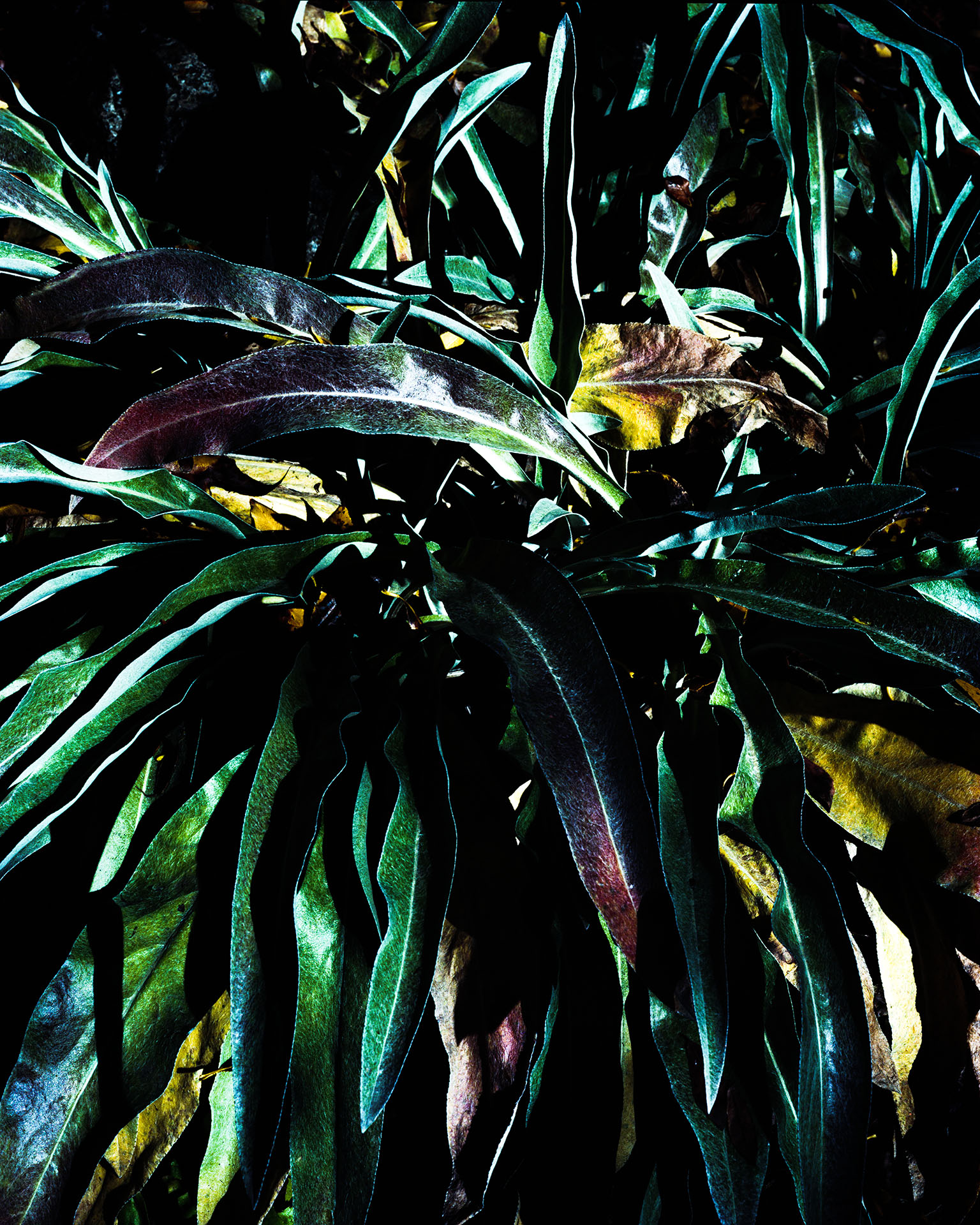
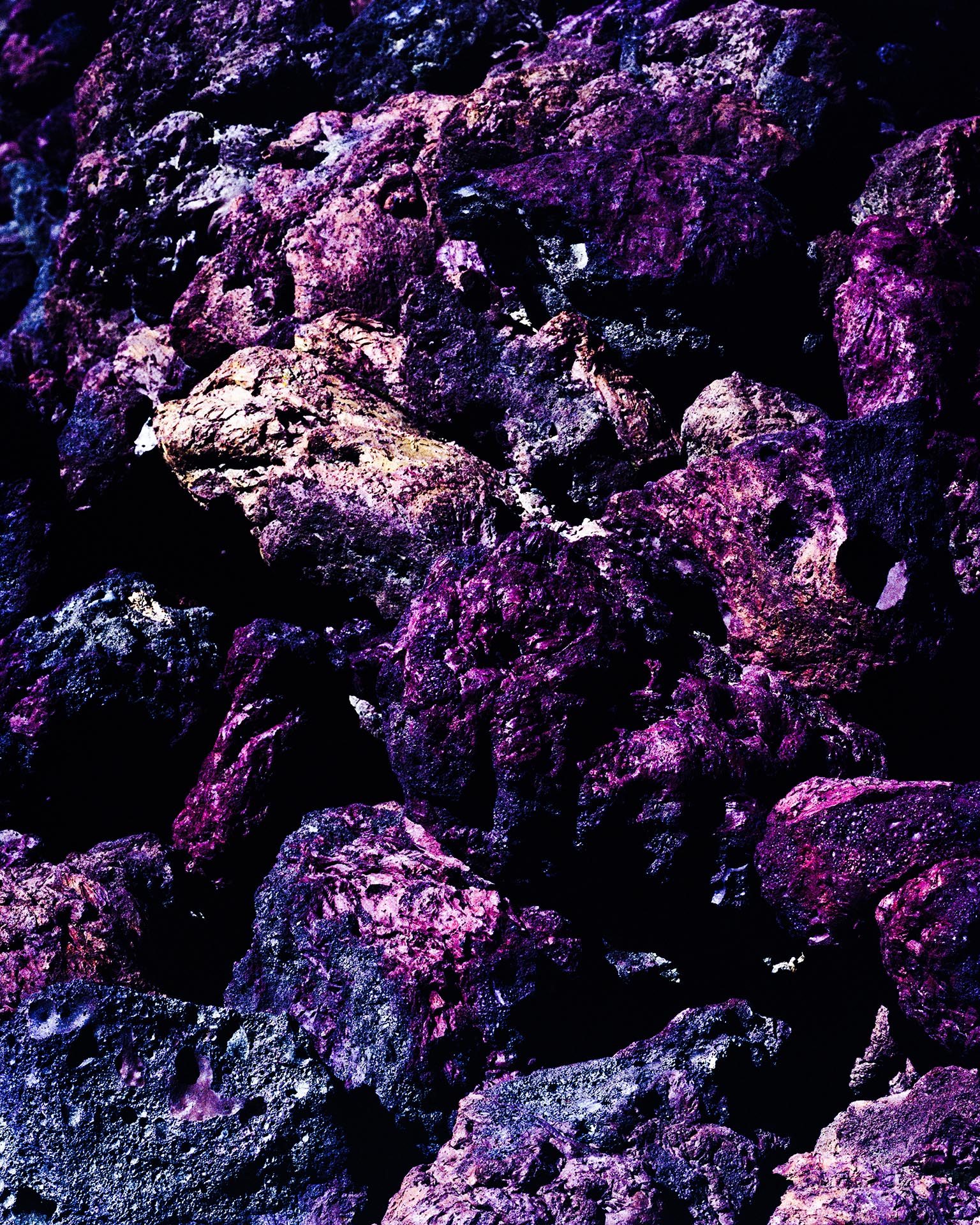
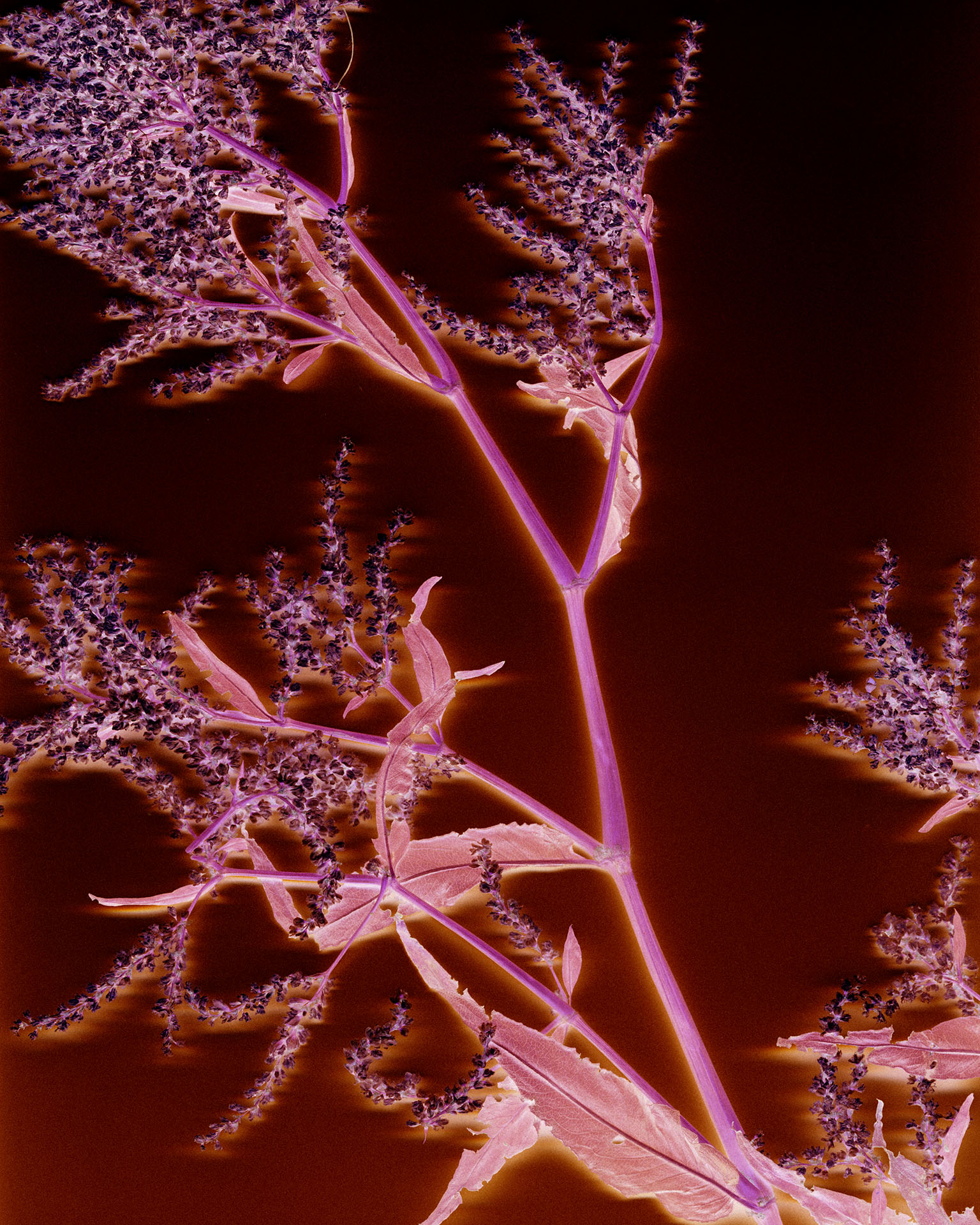
In Marine Lanier’s photographic experiments, the camera becomes a magnifying glass that, like a microscope from the past, examines the nature of the future. The compositions of plant details that occupy the entire frame redefine our usual sense of scale. The structures of the leaves, the patterns of the cells, and the delicate shapes of the enlarged forms evoke both ancient patterns and future figures. The series leads the viewer into a peculiar, imaginary space where the micro- and macro-worlds blur together, turning details into landscapes. The use of negatives, double exposure, and distorted colours evokes a dreamlike, mythological vision. In this nocturnal herbarium, plants belong not only to the present but also to a possible future. The images of plants recall Karl Blossfeldt’s depictions of plant structures, Anna Atkins’s cyanotypes, as well as Timothy O’Sullivan’s landscapes.
The series’ narrative is interwoven with the figure of Hannibal, who, according to legend, traversed the Alps via the Lautaret Pass during his daring crossing. The tender portraits of young gardeners and researchers show both exhaustion and determination. It is a sign of persistence, the imprint of intense, continuous work. Their faces reflect deep contemplation and fatigue, echoing the imaginary gestures of soldiers crossing the Alps. The garden, as a “laboratory,” is not only a scientific space but also a symbolic battlefield. It serves as a metaphor for humanity’s fight against climate change, where fragile living organisms face the forces of a global phenomenon.
In the Lautaret garden, researchers are studying the extraordinary biodiversity, preserving and analysing the plants capable of surviving in this challenging environment. Their goal is to understand how the ecosystem responds to climate change and how vegetation adapts to global warming. One of the most extraordinary examples of the research taking place here is the “flying field” experiment, where a research team literally “moves mountains” by transporting eight tons of alpine grassland by helicopter to lower altitudes to study the effect of a three-degree temperature difference on the plants.
This series, which encourages a new kind of observation, lies at the intersection of science, mythology, and imagination. Through the abstraction of plants and landscapes, it depicts a possible future where past and present overlap, and we no longer ask only what we see, but also what awaits us.